
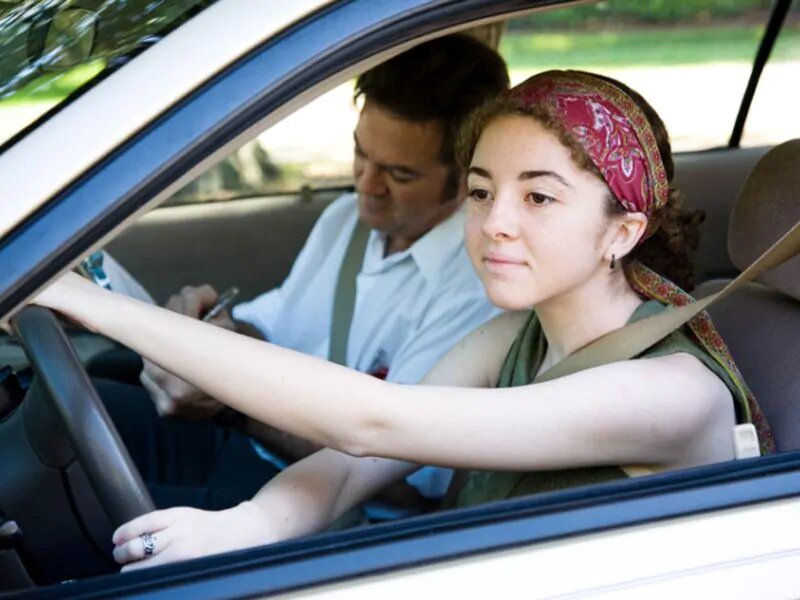
Everything You Need to Know About Your Driving Licence (or Driver’s License)
Whether you’re a teenager gearing up for your first solo road trip, an immigrant adjusting to a new country, or a seasoned driver looking to upgrade your credentials, the driving licence (known in many places as a driver’s license) is one of the most important documents you’ll ever carry. It’s not just a piece of plastic that lets you operate a vehicle; it’s a legal passport to the road, a form of identification, and a record of your driving history.
In this guide you’ll discover:
- The different types of licences and what they allow you to drive
- How to obtain, renew, and upgrade your licence in the most common jurisdictions
- Key differences between “driving licence” (British English) and “driver’s license” (American English)
- Practical tips for keeping your record clean and avoiding costly pitfalls
All of this is presented in an easy‑to‑read, second‑person style so you can see exactly how each step applies to you.
1. Driving Licence vs. Driver’s License – Does the Name Matter?
| Feature | “Driving Licence” (UK, Commonwealth) | “Driver’s License” (US, Canada) |
|---|---|---|
| Spelling | Licence (noun) | License (verb & noun) |
| Legal Terminology | Issued under the Road Traffic Act or equivalent | Issued under the State Vehicle Code or Provincial Motor Vehicle Act |
| Typical Document Layout | Photo, name, date of birth, categories (A, B, C, D…) | Photo, name, address, class (Class A, B, C, etc.) |
| Common Acronym | DL or BRP (Biometric Residence Permit) for non‑citizens | DL (Driver’s License) |
| Usage in Everyday Speech | “I need to renew my driving licence.” | “I need to renew my driver’s license.” |
Bottom line: The two terms refer to the same legal instrument. The spelling and phrasing simply follow regional conventions. When you’re dealing with official forms, always use the term the issuing authority prefers.
2. Types of Licences – What Can You Drive?
Most jurisdictions group licences into categories (or classes) that define which vehicle types you’re authorized to operate. Below is a comparative table for the United Kingdom, United States (by typical state grouping), and Australia.
| Category | UK (DVLA) | US (Typical State) | Australia (National) | Typical Vehicles Allowed |
|---|---|---|---|---|
| A | Motorcycles (including sidecars) | Class M | Class R | Motorcycles of any size |
| B | Cars up to 3,500 kg + 8 passengers | Class D (non‑commercial) | Class C | Standard cars, small vans |
| C | Large goods vehicles ( >3,500 kg) | Class A (commercial) | Class HC | Trucks, lorries |
| D | Buses with >8 passenger seats | Class B (bus) | Class HR | Passenger buses |
| E | Trailer up to 3,500 kg | Class T (trailer) | Class T | Car‑derived trailers |
| F | Light agricultural tractors | N/A | Class R (restricted) | Tractors, farm equipment |
| G | Mopeds (max 50 cc) | Class M (moped) | Class R (restricted) | Mopeds, low‑speed bikes |
How to interpret the table:
- If you hold a Category B licence in the UK, you can drive most cars and light vans. The equivalent in the US is a Class D licence, and in Australia it’s a Class C licence.
- For larger commercial vehicles (trucks, buses), you’ll need to upgrade to the appropriate higher category and often pass additional medical and practical exams.
3. Step‑by‑Step: Getting Your First Licence
Below is a universal roadmap you can adapt to your local authority. The steps are presented in the order you’ll typically encounter them.
3.1. Meet the Basic Eligibility Requirements
| Requirement | Typical Age | Exceptions/Notes |
|---|---|---|
| Minimum age | 16 (UK provisional), 15‑½ (US learner) | Some states allow 14‑year‑old learner permits with parental consent. |
| Residency | Proof of local address (utility bill, tenancy agreement) | International students often need a visa‑linked address. |
| Vision test | 6/12 (UK), 20/40 (US) | Corrective lenses are allowed if you wear them while driving. |
| Legal status | Citizenship or valid immigration status | Some jurisdictions accept a foreign licence for a limited period. |
3.2. Apply for a Learner Permit (Provisional Licence)
- Gather Documents – Passport or birth certificate, proof of address, National Insurance (UK) or Social Security number (US).
- Complete the Theory Test – Either on a computer kiosk (UK) or via a certified online platform (US). Study the official Highway Code (UK) or Driver’s Manual (US).
- Pay the Fee – £34 (UK) or $25‑$50 (US, varies by state).
- Receive Your Learner Permit – You’ll get a paper or digital document with a “L” plate (UK) or “P” plate (US) restriction.
3.3. Log Required Practice Hours
| Country | Minimum Hours | How to Record |
|---|---|---|
| UK | 20 hours supervised + 10 hours of “independent” driving (if over 21) | Keep a paper logbook or use the DVLA’s online “digital log”. |
| US (Most States) | 40–50 hours total, with at least 10‑hour night driving | Use a driving log app; some states require you to sign a supervisor’s affidavit. |
| Australia | 20‑50 hours depending on state | State‑specific logbook required; some permit electronic submission. |
3.4. Pass the Practical Driving Test
- Book the test online or by phone – slots fill fast, so book at least 2 weeks in advance.
- Bring the required vehicle – It must be road‑worthy, insured, and meet the test centre’s criteria (e.g., dual‑control for certain classes).
- What the examiner looks for: vehicle control, observation, signalling, obeying traffic signs, and performing maneuvers (parallel park, hill start, emergency stop).
3.5. Receive Your Full Licence
Once you pass, the authority will issue either a photocard (UK, Australia) or a plastic driver’s license (US). In many places, you’ll first receive a full licence with a “probationary” period (e.g., 2‑year zero‑tolerance for alcohol).
4. Upgrading or Adding Endorsements
If you already hold a standard car licence but want to ride a motorcycle, drive a commercial truck, or haul a large trailer, you’ll need to add a category or apply for a new class. The process generally involves:
- Medical Examination – Especially for heavy vehicle licences (Class A/B in the US, Category C/D in the UK).
- Additional Theory Test – Specific to the new vehicle type.
- Practical Skills Test – Demonstrating vehicle‑specific maneuvers (e.g., coupling a trailer).
- Fee – Typically higher than for a standard licence (up to $200 in the US for a commercial Class A).
Tip: Some jurisdictions allow you to combine categories on a single card (e.g., “B+E” for car + trailer). Check the local rules to avoid unnecessary paperwork.
5. Renewing Your Licence – Keep It Current
| Renewal Frequency | Typical Validity | When to Renew |
|---|---|---|
| UK | 10 years (until age 70) | 3 months before expiry (online, post, or in‑person). |
| US (Most States) | 4–8 years (varies) | 6 months before expiry; many states now offer online renewal. |
| Australia | 5 years (varies by state) | 3 months before expiry; online renewal often requires a photo update. |
Key Renewal Steps
- Check the Expiry Date – Your licence is usually printed on the front.
- Update Your Photo (if required) – Some states demand a fresh headshot every 10 years.
- Pay the Renewal Fee – £55 (UK) or $30‑$70 (US).
- Provide a New Address (if moved) – Failure to update can lead to fines.
Avoiding Lapses: Most agencies will send a reminder via email or text. Set a calendar alert for 2 months before the official expiry date, especially if you plan to travel abroad.
6. Using Your Driving Licence as ID
Your licence is often the primary form of identification for:
- Opening bank accounts
- Purchasing age‑restricted items (alcohol, tobacco)
- Checking into hotels and flights (especially domestic U.S. travel)
Best Practices for ID Use
- Never share the full number unless absolutely necessary.
- Mask the barcode when posting a photo online.
- Keep a digital copy on a secure cloud service as a backup, but never carry the digital file on the same device you use for driving.
7. Common Pitfalls and How to Avoid Them
| Pitfall | Consequence | How to Prevent |
|---|---|---|
| Driving with an expired licence | Fine up to $500; possible vehicle impound | Set calendar reminders; renew early. |
| Failing to update address | Penalty points or fine; possible invalidation of insurance | Notify the licensing authority within 14 days of moving. |
| Ignoring medical conditions (e.g., seizures) | Licence may be suspended; legal liability | Report changes to health; schedule required medical reviews. |
| Not carrying your licence while driving | Fixed‑penalty notice; may be considered “driving without a licence” | Keep the card in your wallet or a designated spot in the vehicle. |
| Overlooked endorsement expiration (e.g., HAZMAT) | Loss of specialty privileges; need to retake test | Mark endorsement expiry dates on your calendar. |
8. Frequently Asked Questions (FAQ)
Q1: Can I drive in another country with my home licence?
A: Most countries honor a foreign licence for short stays (typically up to 12 months). For longer periods, you’ll need an International Driving Permit (IDP) plus your original licence. Check the embassy guidelines of the destination country.
Q2: What happens if I lose my licence?
A: Report the loss to the issuing authority and apply for a replacement. In the UK, you can order a replacement online for £20; in the US, fees range $5‑$30. Expect a temporary paper licence while you wait for the new card.
Q3: Do I need a separate licence to drive an electric scooter?
A: In many places, low‑speed electric scooters (≤15 km/h) are considered personal mobility devices and don’t require a licence. However, faster models (up to 25 km/h) may be classified as motorcycles and need at least a Category A endorsement.
Q4: How can I check points on my driving record?
A: Most licensing agencies provide an online portal (e.g., DVLA’s “View your driving licence” service, state DMV websites). You’ll need your licence number, date of birth, and sometimes a security question.
Q5: Is it possible to transfer a licence from one state/country to another?
A: Yes. Typically you’ll surrender your existing licence and take the local written test (often waived) and a vision exam. Some states have reciprocity agreements that allow a straight swap (e.g., between neighboring US states). International transfers may require a full test.
Q6: What are “probationary” or “graduated” licences?
A: These are restricted licences for new drivers, often imposing night‑time limits, passenger caps, and zero‑tolerance for alcohol. They phase out after a set period (usually 12‑24 months) once you maintain a clean record.
Q7: Can I change the name on my licence after marriage?
A: Absolutely. Submit a name‑change form, your marriage certificate, and a new photo (if required). In the US, this often costs $10‑$20 and can be done online in many states.
9. Quick Checklist – Your Licence Health‑Check
- Expiry date – Renew at least 3 months early.
- Address – Updated with the licensing authority.
- Photo – Current and clear (no sunglasses).
- Medical conditions – Reported and cleared.
- Endorsements – Valid and not expired.
- Points – Under the legal limit (check online).
- Backup – Digital copy stored securely.
If any item is unchecked, schedule the necessary action today. A well‑maintained licence keeps you legal, safe, and ready for any road adventure.
10. Final Thoughts
Your driving licence—whether you call it a licence or a license—is more than a simple permission slip. It’s a dynamic record of your ability, responsibility, and legal standing on the road. By understanding the categories, staying on top of renewals, and proactively managing endorsements and health disclosures, you’ll enjoy the freedom of driving without unnecessary interruptions.
Remember: the road is a shared space. A clean licence not only protects you from fines and penalties; it signals to fellow road users that you’re a competent and reliable driver. Keep this guide handy, tick off the checklist, and drive confidently—knowing you’ve got the right document in the right hands: yours. Safe travels!