
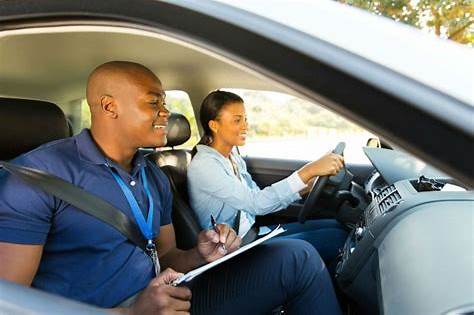
Your Complete Guide to Getting a Driving Licence in the Netherlands
Whether you’re relocating for work, studying abroad, or simply planning to explore the Dutch countryside, you’ll soon discover that a Dutch driving licence (rijbewijs) is the key to unlocking the country’s excellent road network. The process can feel a bit daunting at first, but with the right information you’ll navigate every step with confidence. This post walks you through everything you need to know—eligibility, paperwork, costs, exam structure, and even some handy tips for passing on the first try.
1. Why the Dutch Licence Matters
| Benefit | What It Means for You |
|---|---|
| Legal permission to drive | You can operate cars (category B) and mopeds (category AM) on Dutch roads without needing a foreign permit. |
| Recognition across the EU | A Dutch licence is automatically valid in all EU/EEA countries, making cross‑border trips hassle‑free. |
| Insurance advantages | Local insurers often offer lower premiums to holders of a Dutch licence compared with foreign licences. |
| Employment flexibility | Many logistics, delivery, and transportation jobs require a Dutch licence as a baseline qualification. |
2. Who Can Apply?
| Requirement | Details |
|---|---|
| Age | Minimum 17 years for a learner’s licence (rijbewijs A, B, or C). Full licence at 18 years (category B). |
| Residency | You must be a legal resident of the Netherlands (registered at a Dutch address for at least 185 days). |
| Health | A health declaration ( Gezondheidsverklaring ) is required; you may need a doctor’s assessment for certain medical conditions. |
| Driving experience | If you already hold a licence from another EU country, you can exchange it without taking the Dutch exams. Non‑EU licences usually need to be converted after passing the theory and practical tests. |
| Criminal record | A clean driving record is expected. Certain convictions can delay or block the application. |
Tip: If you are under 18, you can still start the theory and practical training early. The Dutch system allows you to take the theory exam at 16 ½ and the practical exam at 17 ½, provided you have a supervising adult.
3. The Roadmap – Step‑by‑Step Process
Below is a practical checklist you can print out and tick as you progress.
| Step | Action | How to Do It | Timeframe |
|---|---|---|---|
| 1. Register at your municipality | Obtain a citizen service number (BSN) and proof of residence. | Visit the gemeente (city hall) with passport, rental contract, and a completed registration form. | 1‑2 days |
| 2. Order a provisional licence (Rijbewijs Aanvraag) | Get a Rijbewijs (temporary) that lets you start lessons. | Apply online via the RDW (Netherlands Vehicle Authority) website or at a Rijbewijs Centrum. Upload ID, proof of address, and pay the €45‑€55 fee. | Same day (online) |
| 3. Pass the health declaration | Confirm you meet medical standards. | Fill out the health questionnaire (available on the CBR website). If asked, visit a general practitioner or an approved medical centre. | 1‑2 weeks (if doctor visit needed) |
| 4. Study for the theory exam | Master road signs, traffic rules, and eco‑driving. | Use the official CBR app, practice tests, or enroll in a theoriecursus at a driving school. | 4‑6 weeks (self‑study) |
| 5. Book and pass the theory exam | Secure your theory certificate (theoriecertificaat). | Book through the CBR website; exam costs €37.50. The test is 45 multiple‑choice questions, 55 % needed to pass. | Usually within 2 weeks of booking |
| 6. Start practical lessons | Get behind the wheel with a certified instructor. | Choose a driving school; a typical package is 30‑40 hours. You’ll receive a lesboek (lesson log). | Ongoing; most learners finish in 2‑3 months |
| 7. Book the practical exam | Demonstrate safe driving skills. | Schedule via the CBR portal after you’ve passed theory. Cost €231.30 (including camera). | Up to 8 weeks depending on location |
| 8. Pass the practical exam | Receive your Rijbewijs (full licence). | Examiner will evaluate maneuvers, traffic awareness, and compliance with road rules. | Usually the same day you pass you’ll receive a temporary plastic licence; the official card arrives by mail (≈ 2 weeks) |
| 9. Optional: Exchange foreign licence | If you have an EU licence, apply for a straight swap. | Submit your current licence and a passport‑size photo to the Rijbewijs Centrum; no exams required. | 2‑4 weeks |
4. Understanding the Licence Categories
The Dutch system mirrors the EU classification. Below is a quick reference for the most common categories you’ll encounter.
| Category | Vehicle Type | Minimum Age | Typical Use |
|---|---|---|---|
| AM | Mopeds & light quad bikes (max 45 km/h) | 16 | Campus commuting, short trips |
| A1 | Light motorcycles (max 125 cc, 11 kW) | 18 | Urban riding |
| A2 | Mid‑size motorcycles (max 35 kW) | 20 (or 18 with A1 progression) | Hobby riding |
| A | Unlimited motorcycles | 24 (or 21 with A2 progression) | Full‑scale motorcycling |
| B | Cars ≤ 3,500 kg, ≤ 8 seats | 17 (learner) / 18 (full) | Everyday driving |
| C | Light trucks > 3,500 kg | 21 | Professional hauling |
| D | Buses | 24 | Public transport drivers |
| T | Agricultural tractors | 16 | Farm work (restricted to farms) |
Note: If you aim to drive a vehicle for work (e.g., truck, bus), you’ll need additional kwalificaties (certificates) and possibly a code 95 vocational training.
5. Costs Overview – What to Budget
| Item | Approximate Cost (EUR) | Remarks |
|---|---|---|
| Provisional licence application | €45‑€55 | Includes processing; valid for 5 years |
| Theory exam | €37.50 | One‑time fee |
| Practical exam | €231.30 | Includes on‑board camera and examiner travel |
| Driving lessons (per hour) | €45‑€55 | Prices vary by school and region |
| Full licence card (post‑exam) | €38.50 | Sent by post; includes photo |
| Health declaration (if doctor visit needed) | €30‑€60 | Depends on provider |
| Exchange foreign licence (if applicable) | €30‑€50 | Administrative fee only |
Average total: For a first‑time driver (category B) you can expect €1,500‑€2,300 including lessons, exams, and administrative fees. Planning ahead and booking lessons in bulk can reduce the per‑hour cost.
6. Tips to Pass the Theory Test on the First Try
- Use the official CBR app – It contains the exact question bank and updates when regulations change.
- Practice with timed mock exams – Simulate the 45‑minute limit to build stamina.
- Focus on “eco‑driving” questions – These are a newer addition and often catch candidates off guard.
- Study the road signs deck – Unlike many countries, the Netherlands includes several “environmental” signs (e.g., low‑emission zones).
- Review the “danger perception” section – CBR assesses whether you can spot hazards in complex scenarios; visualizing real traffic situations helps.
7. A Day in the Practical Exam – What to Expect
| Phase | What Happens | Key Points to Remember |
|---|---|---|
| Arrival | Check‑in at the test centre; you’ll receive a short briefing. | Bring your provisional licence, ID, and a valid vehicle (car or scooter). |
| Pre‑drive safety check | You’ll be asked to adjust mirrors, seat, and fasten seatbelt. | Perform these calmly; the examiner watches but won’t intervene. |
| Maneuvers | Reverse parking, three‑point turn, emergency stop, and lane changes. | Use the “look‑over‑shoulder” technique for blind spots; signal early. |
| Road driving | Approximately 15‑20 minutes on public roads. | Keep speed within limits, respect cyclists, and obey traffic lights. |
| Conclusion | Examiner gives immediate feedback; you’ll know if you passed. | If you fail a maneuver, you can often continue to the next part; a single error usually isn’t fatal. |
Pro tip: The examiner’s camera records everything—think of it as a safety net. If you make a tiny mistake, the video may show you corrected it quickly, which can still be counted as a pass.
8. Common Pitfalls and How to Avoid Them
| Pitfall | Why It Happens | How to Prevent |
|---|---|---|
| Skipping the health declaration | Assuming you’re “healthy enough”. | Fill it out early; schedule a doctor’s visit if needed. |
| Under‑estimating the theory exam | Believing you’ll pass after a few practice tests. | Aim for ≥ 85 % in mock exams before booking the real one. |
| Relying on a single instructor | Budget constraints lead to limited lessons. | Combine lessons with a friend’s car (if allowed) for extra practice. |
| Not mastering blind‑spot checks | Dutch traffic is cyclist‑heavy; missed cyclists are a common error. | Practice “shoulder check” daily, even outside lesson time. |
| Forgetting to bring required documents | Missing ID or provisional licence on test day. | Pack a checklist night before; keep everything in a dedicated folder. |
9. Frequently Asked Questions (FAQ)
Q1: Can I drive with a foreign licence while waiting for my Dutch licence?
A: Yes, a valid EU licence works immediately. For non‑EU licences you can drive for up to 185 days after registering as a resident, after which you must convert it.
Q2: What if I fail the practical exam?
A: You can retake it after a minimum of 2 weeks. The fee is the same as the first attempt. Use the waiting period to focus on the specific maneuvers you missed.
Q3: Do I need a separate licence for mopeds (AM) and motorcycles (A1/A2/A)?
A: Yes. Each category requires its own theory and practical exam, though the theory exam is shared across categories (you can request the appropriate certificate after passing).
Q4: How long is a Dutch driving licence valid?
A: The physical card is valid for 10 years. After that, you renew it at your municipality; the underlying qualifications (e.g., category B) remain valid indefinitely unless revoked.
Q5: Is there an “age‑exception” for people with a medical condition?
A: Certain conditions (e.g., epilepsy, diabetes with insulin) may require periodic medical reviews. The CBR decides on a case‑by‑case basis, sometimes granting conditional licences.
Q6: Can I take the theory exam in English?
A: Yes. The CBR offers the theory test in English, French, German, and Spanish (among others). However, practical instruction is typically in Dutch, so a basic understanding of traffic signs and commands is essential.
Q7: What is “code 95” and do I need it?
A: Code 95 is a professional driver qualification required for commercial drivers (categories C and D). It consists of 35 hours of training and must be renewed every 5 years.
Q8: Are there discounts for students or low‑income applicants?
A: Some municipalities and driving schools provide reduced rates for students, particularly for the theory exam. It’s worth asking your local gemeente and checking the driving school’s website.
10. Final Checklist – Are You Ready?
- Residency proof (registration at the gemeente)
- BSN number (citizen service number)
- Health declaration completed and approved
- Provisional licence ordered & paid
- Theory study – 80 %+ practice test score
- Theory exam passed (certificate saved)
- Driving lessons logged (minimum recommended 30 h)
- Practical exam booked and scheduled
- Required documents ready for exam day (ID, provisional licence, vehicle registration)
If you tick every box, you’re well on your way to cruising the Dutch highways, navigating the iconic canals‑side bridges, and maybe even taking a weekend road‑trip to the coast or the Limburg hills.
11. Where to Find More Information
- CBR (Centraal Bureau Rijvaardigheidsbewijzen) – Official site for theory/practical exam booking, study material, and health declarations: https://cbr.nl
- RDW (Rijksdienst voor het Wegverkeer) – Vehicle authority for licence issuance and exchanges: https://rdw.nl
- Rijschool Directory – Search for accredited driving schools by city: https://rijschool.nl
- Gemeente Websites – Local registration and residency procedures (e.g., Amsterdam: https://amsterdam.nl)
12. Your Road Ahead
Getting a Dutch driving licence is more than a bureaucratic hurdle; it’s a passport to full mobility in one of Europe’s most bike‑friendly yet motor‑friendly nations. By following this guide, staying organized, and dedicating a few focused weeks to study and practice, you’ll join the ranks of confident Dutch drivers who share the road respectfully with cyclists, pedestrians, and fellow motorists.
Take the wheel, enjoy the ride, and welcome to the Netherlands—where every kilometre feels like a new discovery. 🚗